The Blackstone Chronicles I: The Missing & The Dead Preview
Chapters 1-3

Files

A Note From Mark
Thank you for being here at the very beginning.
Here are the prologue and first three chapters of The Blackstone Chronicles I - The Missing & The Dead, a cozy mystery featuring Maggie and David Blackstone investigating a murder in Bloomington, Indiana. This early access is only for folks who signed up through Mystery Maniacs or found me on Substack.
Starting in March, I’ll release this story as a serial - one chapter per week on Patreon. Before that public launch, I wanted to share these opening chapters with you. They’re as polished as I can make them (thanks to beta readers), but I’m still listening if something jumps out at you.
I’m not asking you to be an editor; I’ve got those folks. I’m curious about your experience as a reader. Does the story grab you? Do you care about Maggie & David?
I’ll follow up in a couple of weeks with details about the March launch, pricing tiers, and the full serial experience. For now, just enjoy the story.
Thanks for taking this journey with me.
Mark
The Blackstone Chronicles I
The Missing & The Dead
Preview
Chapter 1
After calling the police, Maggie knew her next call would be to her husband, David.
She’d only been trying to clear her head: to outpace the low-grade anxiety that had followed her from New York to Bloomington, from her old life to Emily Hurd’s old office. But she’d chosen this: the job, the town, the chance to prove she could fill shoes everyone assumed were too big. So she found places to walk with her English bulldog, Matilda, wheezing at her side, and tried to believe she’d made the right choice.
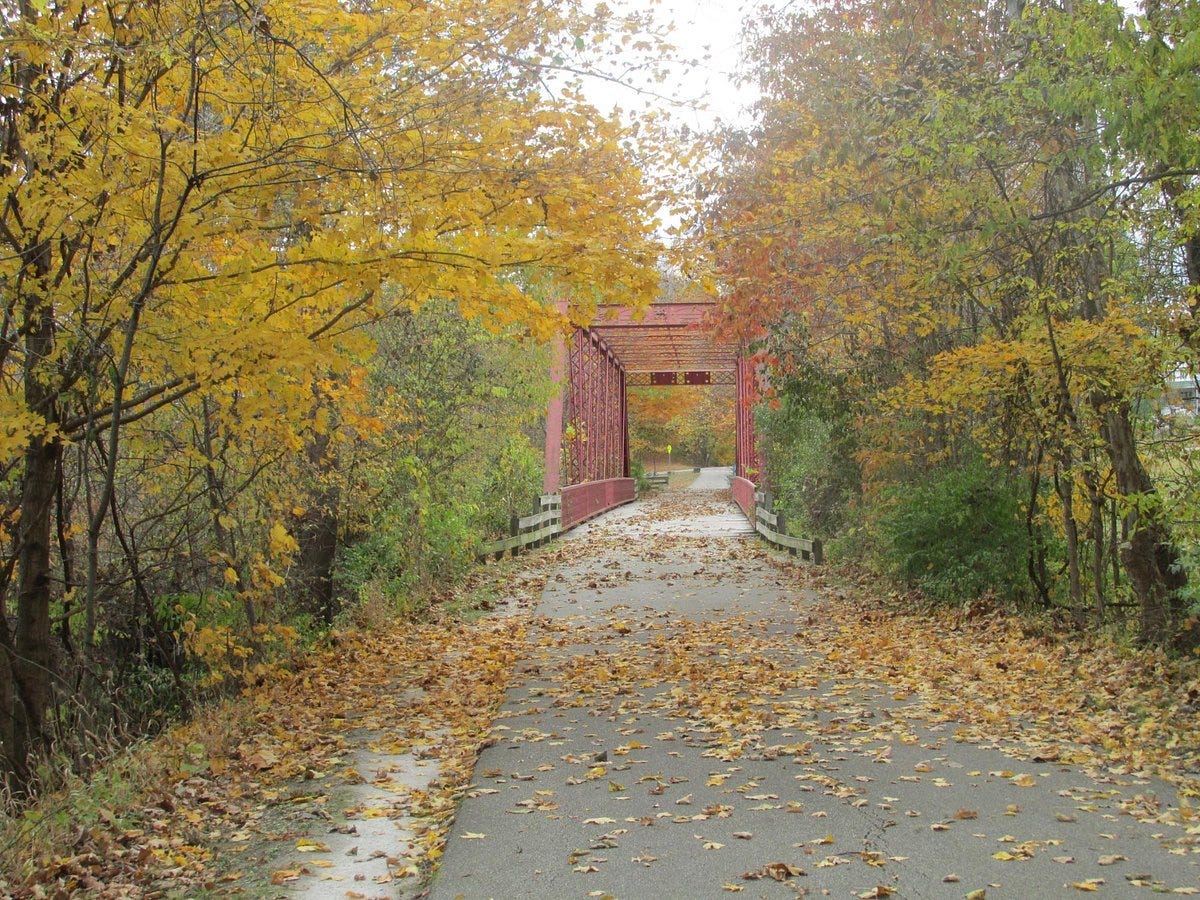
She parked near the trailhead off Country Club Drive. Matilda loved car rides but planted her paws when they stopped, forcing Maggie to lift all sixty pounds of the bulldog to the pavement. At five-foot-six and built more for running than powerlifting, the maneuver always left her slightly winded. A trio of cyclists in matching racing shirts zoomed past toward the trail entrance. Maggie knew a social group engaged in collective behavior when she saw one. The parking lot held a mixture of SUVs and student beaters: a dented Honda Civic with a peeling bumper sticker, a rusted Subaru with a cracked windshield. A wooden sign marked the trailhead: “Bloomington Rail Trail.” Beyond it, sunlight and shadow striped the path.
Gravel crunched beneath her shoes. The drone of traffic diminished, and it was replaced by birdsong. Though September had been warm, the morning air carried a chill, and somewhere nearby, someone had lit a fire. The sharp, clean scent of burning oak drifted through the trees.
This time was for quiet, not lists. The maples had turned a uniform, buttery yellow. Softer than the fiery reds and oranges she’d left behind in the Adirondacks. A quieter beauty. A gentle slide into autumn rather than a riotous bonfire.
Bloomington was a third the size of Syracuse, and though they’d been only five hours from New York City, she felt like they were in the middle of nowhere now. But Emily had made a life here, and so could she. Her work didn’t need tall buildings or subways; it needed people, and people were everywhere.
Maggie kept a steady, natural pace, her mind free to wander to the audiobook in her ears. She was halfway through the latest novel from that British chat show host who managed to write a decent book. But for Matilda, this was a mini-marathon. The narrator’s posh accent rolled through the story while beneath it, Matilda’s breathing came in wheezy gasps. She’d already determined the killer’s identity. Knowing the solution and waiting for it to be revealed was like getting the first look at the results of research that proved her theory correct.
The gentle incline barely registered in Maggie’s calves, but the bulldog was struggling. She reached down to scratch behind Matilda’s floppy ears. These morning walks were meant to appease Dr. Waters, who clicked her tongue and wagged her finger whenever Matilda hit the scale. Maggie slowed her pace for the bulldog’s sake. Her mind drifted to next week’s class schedule. She’d accepted her former PhD advisor Emily Hurd’s position only weeks ago. Emily’s old syllabus, now hers to navigate. She was glad there had been a path left, but she wanted to make it her own. To strengthen a wounded department.
She had been walking for about thirty minutes and was thinking of turning around when Matilda noticed something first. The dog sniffed at the air with short, sharp inhales and shook her head, making her collar and tags rattle. Then Maggie smelled it: something dark and musky. The bulldog’s nostrils continued to flare. She pulled hard on the leash, something she rarely did.
Maggie assumed at first that Matilda had to do her business, which was strange since she had gone before they left the house. Matilda whined, tucking her tail and casting furtive glances over her shoulder as if worried someone might be watching. She’d only ever gone in the privacy of their fenced yard. A creature of habit and peculiar dignity.
As they continued down the path, the scent grew more intense. Matilda tugged harder, and her sixty pounds of muscle and fat pulled Maggie to the side of the trail. As Maggie skidded on the loose gravel, a flash of pale skin caught her eye among the brown oak leaves and yellow maple litter. A frantic drumbeat started in her chest. Leaves crunched underfoot. She tapped her AirPod, silencing the narrator mid-sentence. Her pulse hammered in her neck.
At first, seeing the pale skin and utter motionlessness, Maggie thought it was a mannequin left as some college prank, but she recognized it was not something, but someone. Who would put a mannequin out in the woods? As she stepped off the path, fresh, earthy loam filled her nostrils. A mannequin would look plastic. This shape was more organic and imperfect. She was looking at something soft, not hard. It couldn’t be. The leaves crunched under her feet. Each passing second revealed more details. If it wasn’t fake, then what was a person doing there? Her shoulders rose and fell as if answering the question. Looking back and forth, Maggie squinted at what she was seeing. The person was utterly still. Brush scratched her cheek as she pushed through for a better view. This wasn’t an it; she was a person.
Her breath caught. Heat flooded her chest. She squeezed her eyes shut for a second, took one deep, steeling breath, and opened them again. Farther from the path, the trees cast more shadows. Her pulse hammered against her ribs. Breathe, Maggie. Just breathe. Jogger. Twisted ankle. Needs help. The checklist steadied her: check for breathing, call for help, apply pressure. She stepped forward, hand already reaching for her phone, instinct overriding fear.
The person lying on the forest floor was young. A student. The thought was instant. Not high school, but college-age. A woman lying on the ground, straight as an arrow, with her hands above her head and her legs straight beneath her. Her green shirt was pulled up over her face, revealing a tight sports bra. A dark stain of blood marked the inside of the t-shirt. A chunk of limestone rested nearby, its gray surface sharp against the soft leaves, one edge smeared dark and wet. The woman’s pale stomach caught her attention first. Matilda barked (another rare sound), startling Maggie. Any hope of helping dissipated like morning mist.
“Hello?” Her voice was clear, a desperate attempt to wake the woman, to make this a nightmare. A cold knot tightened in her stomach. Maggie stared at the woman’s exposed chest to see if it moved, but there were no signs of life, only stillness. She scanned the area methodically, her mind flashing to the countless British detective novels she’d devoured: crime scene. The training kicked in. Her sociology training warred with raw human response. Part of her cataloging details, part of her wanting to run.
She needed to help if she could and had to think like a first responder. She crouched carefully, trying not to disturb anything, and reached for the woman’s wrist. The skin was cold, unnaturally so, and waxy. She watched the chest again, willing it to rise, willing the woman to gasp or cough. Nothing. Just to confirm the woman was dead, Maggie moved up the woman’s torso to check for a pulse. She hesitated and then touched her neck. This woman was dead. How would a detective look at this? She forced herself to look, really look, committing details to memory. Someone had to.
The silence of the woods pressed in, no longer peaceful but profound, absolute. It was the silence of a stopped clock, a finality that chilled her more than the morning air. There was no phone or headphones. No keys. No bag of any kind. Robbery? That was strange. Clearly not an accident. No one falls like this. Clothes would have been disturbed during a struggle. Even with the body in front of her, the word felt strange to think. Maggie took a moment. This poor woman would never speak to her parents again, never laugh with a partner. She was too young to be this quiet. Maggie’s throat tightened. She swallowed. When this woman woke up this morning, she did not know it would be her last day. Maggie felt sorry that she’d been left in the forest like trash. Now, she had a duty: to be a witness for this person. To be the voice she had now lost. Maggie struggled to return to viewing this as a detached observer, but the adrenaline was increasing her breathing and heartbeat.
She scanned the surrounding trees. This was a public space, a place of leisure, exercise, and community. Was the killer still watching? Disrupting that peace? Matilda barked again, the sound echoing through the woods, snapping Maggie back. She led the dog to the path, pulled her close, told her to sit, which Matilda ignored with the regal disdain of a bulldog who’d heard that particular suggestion at least a thousand times before. Her hands trembled on the phone. She nearly dropped it. Returning to the sunlit path warmed her. She slid her phone from her pocket, pulled out her earbuds, and dialed 911.
The phone rang a few times, made an artificial thud, and an operator spoke.
“911, what is the nature of your emergency?” The words came out flat, each syllable given the same weight, as if the operator were reading from a grocery list.
“I’ve found a body,” Maggie said, her voice clipped and precise.
“Can you repeat that, ma’am?” The operator’s voice lost its bored edge. “And give me your location and your name.” The operator’s Sunday had just changed, too.
“My name is Maggie Blackstone, and I am on the B-line trail near Country Club Road. I have found the body of a young woman.”
“Ma’am, I have police and an ambulance on the way. What is the nearest cross-street or landmark you passed? A parking lot? A trail marker? A bridge?”
Maggie scanned the area.
“Sorry, I’m new. I’m not sure. About twenty minutes into the trail. Not sure what direction.” Maggie could feel her chest heaving.
“New, ma’am?”
“Sorry, new to the area.” Maggie swallowed, feeling the movement go down her throat. “I think it’s called... the B-line.”
“Ma’am, I have help on the way. Are you in a safe location?” Maggie had not even thought about it. The person who did this could still be nearby. The blood began to roar in her ears.
“I think so,” Maggie said, looking around.
“Do you see anyone else in the area?”
“Some joggers are coming this way.” Two female joggers were approaching. Their neon athletic gear was bright against the green backdrop.
“Maggie, you said you found someone. Are they conscious? Do they need medical attention?” The clatter of a keyboard echoed faintly over the line. Matilda pulled toward the joggers as they approached. An oscillating light began to fill the edges of her vision. Nothing like this had ever happened to her, and she felt the urge to notice, to interpret things, but the light was overwhelming her vision.
Her hands shook. She knew she needed to respond to the operator, but at that second, all she could think about was sitting down. She needed to be on something solid and stable, with no chance of moving. She was lowering herself when she felt the joggers’ strong arms helping her to the damp ground. She let out a deep exhale and tried to talk. Matilda pressed against her leg, but Maggie barely noticed.
One of the joggers mouthed, “Are you okay?” and Maggie felt her shoulders shrug, as if it wasn’t her body.
“Yes. She’s... cold. Not breathing. No pulse. I think there’s blood.” The younger jogger put a hand over her mouth. The ground seemed to rise toward Maggie.
“Did you touch the body, ma’am?”
“Only her wrist. I had to be sure.” Maggie’s breathing was quickening.
“Of course. Ma’am, I need you to stay on the line with me until officers arrive.” The voice seemed to drift away, slow and distant.
The trees and the light between them began to flicker at the sides of her vision. The phone slipped from her hand. One of the joggers caught it, and a new voice, calm and steady, took over the call.
“Hello, who is this?” The jogger’s voice seemed to stretch and warp, pulling away like taffy.
Her hands tried to reach for her phone, but they felt heavy. She was the person who found the body at the start of a TV show. Black spots bloomed in her vision, swallowing the dappled light of the trees until there was nothing left.
Chapter 2
Under the heading ‘Book Ideas Fall 2025.’
“The Chalk Outline of a Family: A woman must confront the trauma of her parents’ divorce when she realizes the monstrous ‘imaginary friend’ her younger brother draws in chalk is a very real creature that erases its victims from existence.” David wrote ‘cliche ‘ beside this entry in his notes. The idyllic family in the outline had no drama, but his own family had caused him enough issues. Meeting and learning to trust Maggie had given him more family than he ever thought possible.
“What the Attic Demands: A family’s history of hoarding is revealed to be a ritualistic tribute to an ancient being living in their attic, and the youngest daughter must break her compulsive need to ‘collect’ things before she is collected herself.” David shook his head.
“No attics,” he said and crossed out the entry. He kept an ideas notebook for Sunday morning brainstorming, a process that had not steered him wrong since he quit teaching and had been writing full-time. Nothing clicked today. That’s okay; some days were like that. He had finished the proofs of novel 24 before they had left New York. Maybe this early-20th-century murder story in Indiana had something.
Maggie’s number appeared on the screen. He frowned. A call? His wife never called. Not for small stuff.
He answered. “Hey...”
“Is this David Blackstone?” An unfamiliar woman’s voice. Not his wife.
His chest seized. “Yes. Who is this? Where’s Maggie? Is she... Is she okay?”
“She’s right here, but she passed out,” the woman said.
David was already on his feet, grabbing his keys. “Passed out? What happened?”
“I don’t know. We were jogging, and she was on her phone. 911, I think. And then she just... collapsed. We caught her.”
“Is she breathing? Is she hurt?” His hands shook as he fumbled with his wallet. At six-foot-one, he usually felt steady, capable. Not now. Not with Maggie collapsed somewhere and him miles away.
“She’s breathing. She’s conscious now, but she seems shaky. The police are coming. There’s... something happened on the trail.” David was all too familiar with not being told a whole story. That feeling inside his throat when he knew there was more that was kept from him, one of the few things he’d learned from his father.
“Something? What do you mean?” David felt his voice rise.
A long pause.
“She’s okay. I think you should just get here.” There it was. There was something more, so he needed to get there.
“Where are you?” David grabbed his keys and wallet from the black lacquer dish on his desk. He walked out of the house, not thinking to lock the door.
“We’re on the B-line trail. Everything is... She’s okay. Help is on the way. We have your dog.” The voice on the phone sounded breathless. David heard the jangle of Matilda’s collar.
“I’ll be right there.” He ended the call, entered ‘B-line trail’ into maps, and slid the phone into its cradle. What if she’s hurt worse than they said? Would the woman have told him?
The GPS estimated eight minutes. Too long. As he backed up, he caught sight of a woman and her dog on the sidewalk behind him in his peripheral vision. He stopped short, waved, and let them pass. He noticed the woman staring at his London cab’s right-hand-drive steering wheel. He pulled onto the main road, knuckles white on the wheel. Sunday morning traffic: churchgoers, families heading to brunch. He wove between them, not quite speeding, though he wanted everyone to move out of his way. Of course, they could not know he needed to be there, but he wished he could tell them all.
What had happened? The woman’s voice: young, breathless, scared despite trying to sound calm. “Something happened on the trail.” Not an accident. Something. His mind spun through scenarios, trying not to land on the worst possibilities. He had saved his mother from situations of her own making, making him feel like the responsible person when he should have been the one being taken care of. Maggie wasn’t like that. She was responsible and independent, so this wasn’t something she’d done. Was it an accident? Did Maggie fall? Did she hit her head? A cyclist collision. A...
He cut the thought off. She was conscious. Talking. Fine. The woman had said conscious, breathing, okay. He had to believe her when his throat was warning him not to. But 911 doesn’t bring this kind of response for “fine.”
From half a mile away, he spotted the flashing lights. He’d braced himself for one cruiser, maybe two. This was a small-town panic attack. He remembered being a boy and telling someone that one of the fires at their house had caused so many trucks to come; he wasn’t sure there were any more left in the city. First responders had crammed emergency vehicles into the small lot: cruisers, ambulances, even a fire truck blocking Country Club Road. Diesel exhaust stung his eyes. Horns blared. This felt like real violence, not like something in his books. A minivan had rear-ended a sedan, drivers too busy gawking to watch where they were going. He had a real reason for being there, while they were just indulging in voyeurism. Red and blue lights strobed across the asphalt. He pulled his black London cab into the Kroger lot and ran.
More than nine vehicles for a fainting spell? The caller had said Maggie was fine. But this wasn’t fine. They lied. People always lie when things get hard. Something’s really wrong. This was bad.
He checked the GPS. The trail entrance was a short walk from here. He pried his fingers off the wheel, stretched them. His hand shook as he ran it through his hair. She had to be okay.
“I have to close that book,” he said to himself. “Not now.”
Then he heard Matilda’s bark: high-pitched, frantic, terrified. The bulldog hardly ever barked. He ran toward the sound.
As he reached the entrance of the path, a uniformed officer stepped in his way.
“Where’s my wife?” David pleaded.
“Hold on, sir. I can’t let you back there,” the officer said, his voice even and authoritative.
“My wife’s in there!” David responded.
“Your wife?” The officer glanced back toward the trail, not the ambulance. “Sir, I’m sorry, but...”
“Yeah,” David said, a bit out of breath.
“I’m sorry to tell you this, sir, but...” The officer’s gaze flickered toward the ambulance. He cleared his throat.
“David!” He saw Maggie cup her hands around her mouth and shout his name.
David turned. His wife: bright, warm eyes, curls falling over her face, even on a gurney at the back of an ambulance. She waved at him from beneath a bright blue blanket. He finally exhaled. The morning sun caught her hair, making her look almost normal, like this was any Sunday morning, not a crime scene. Matilda sat beside the gurney. As he turned towards them, he noticed he had been trembling.
“Oh, there she is,” David said, running toward his wife. He sped toward her, his breath catching.
Maggie looked up at him, her eyes wide and searching his face. She winced at the strobing lights and pulled the blue blanket higher around her shoulders.
David reached her and hugged her tight. He felt tremors run through her shoulders, her breath warm on his neck. He realized his body was doing the same, and they calmed each other. The scent of her sandalwood shampoo, familiar, grounded him in home and family. Everything beyond her fell away. He held her tighter. Gradually, the shaking subsided. Her breathing evened out. Matilda pressed against both of them, her drama apparently exhausted now that they were together. David’s hand scratched the dog’s head to comfort both the dog and himself.
“Baby, are you okay?” he whispered to her. Matilda moved to sit beside his legs, leaned into him, and quieted, the incessant barking finally checked.
“I’m so mortified. Look at all this. As a sociologist, it’s fascinating, but as the person who caused it... I want to disappear,” she whispered. He held her tighter. He sat beside her on the gurney, not letting go.
“I found a dead body.”
“What? Are you okay?” David asked again.
“Oh, I passed out, but that’s not important,” she said, with a dismissive wave of her hand.
“Not important? What made you pass out?” he responded.
“That’s what I’m trying to tell you! I found a murder victim!” she whispered.
“Oh, come on, Maggie. I am sure that’s not what you found,” David said, stroking her hair. His worry came out sounding like mistrust. David knew she wasn’t lying, but had her passing out made her mix things up?
“I found a girl... her head was...” Her voice broke. David saw her throat working to swallow. The EMT in the ambulance cab chose that moment to return, cutting off what she’d been about to say.
“What? Start at the beginning,” David urged.
Maggie took in a deep breath and began to explain.
“I was walking Matilda along that path over there. It was one of my regular routes, though we had only done it a few times.”
David nodded, encouraging her to continue. His hand found hers.
“We were walking along when Matilda started pulling me to the side of the path, where I saw the body...”
“Oh, Baby,” David said, holding her tighter.
“It’s a young woman with her clothes messed up. Her shirt was over her head, and I could see a stain that looked like blood. She was so pale and still. No pulse. I checked. Her wrist was already cold. A dead body. A real one, not one staged in a parlor for an Agatha Christie novel. So I did the right thing: I called 911. I was going to call you next and tell you all about it, but then I started feeling shaky and had to sit down.”
“It’s okay, Mags. It was a lot,” David whispered.
“I don’t think I passed out for long, but these nice women helped me, and then I saw you. David, it was like a scene from a book. Well, not one of yours. There wasn’t as much gore, ectoplasm, or... things. But you know what I mean,” she said, nearly out of breath.
David pulled back to look at her face. Really look at her. Her pupils were normal. No visible injuries. But her hands still trembled slightly where they gripped his arms.
“You’re sure you’re okay? No dizziness? Nausea?”
“I’m fine. Really. Just... shaken.” She felt like it was so hard to say any words about how she actually felt, like a headache that inhibited her speech. She glanced toward the trail entrance. “David, she was so young. Someone’s daughter. And whoever did this just left her there like...” Her voice caught.
He pulled her close again. “Hey. You did everything right. You called for help. You stayed safe.”
“I know. I just keep seeing her.”
“That’s normal. That’s shocking.” He kissed the top of her head. “We’ll talk to the detective, then I’m taking you home.”
“Do you have any idea who it was?” he asked.
“No, her face was covered with her shirt, and her shorts were pulled down,” she responded.
“Maybe I should come out here with you, Mags,” David said.
“No, it was strange. Staged, it seemed. Again, I hate to say it, but like something on a television show,” she said.
The radio in the ambulance squawked to life. They both jumped, holding each other tighter.
“Can I take you home, away from this?” he asked, gesturing.
“An officer told me I would have to talk to a detective. A real one,” Maggie said, almost gleefully. He saw the look in her eyes: the one she got when a theory snapped into place, the kind of gorgeous idea that formed in her head and started to take her over. It was the look of a master musician finding a new riff.
An EMT approached with a clipboard. “Mrs. Blackstone? I need you to sign...”
“Can it wait?” David asked. “She’s still processing.”
The EMT glanced at Maggie, then nodded. “I’ll come back.”
David watched the organized chaos around them. Yellow tape was going up. Photographers. Evidence techs in white suits were disappearing down the trail. A real crime scene. Not researching for his books. His thoughts kept coming back to the moment he saw her and how good it had made him feel. He allowed himself to admit he was really concerned. A holdover from taking care of his mother’s situation. Maggie was real. His wife’s hand found his. Squeezed once. Then someone cleared their throat behind them.
Chapter 3
Maggie and David turned from the ambulance gurney where she was perched. A blue blanket was tucked around her legs, the color stark against the flashing red and blue lights. The antiseptic smell of the ambulance filled Maggie’s nostrils.
A man stood there, his shoulders slumped, but his blue eyes commanded attention. Maggie watched him approach, cataloging the details: a sport coat a little too big, a white shirt with slightly yellowed buttons, and khakis. He needed a shave, and the lines around his eyes suggested a much-anticipated day off had been interrupted. He must be the detective she was told to wait for, though he was a bit on the nose. She just wanted to get home, and he was in her way. As he got closer, his face seemed familiar, a memory she couldn’t quite place.
His eyes were bright and open, his smile loose as he scanned her, registering the rough blanket, David’s protective stance beside her, and the wedding band on her finger. It was an unconventional ring, a black alloy to match David’s, and his eyes lingered on it for a second.
Recognition flickered across his face.
“Maggie Townsend?” he asked, weight moving from foot to foot.
The name, spoken with such familiarity, made it click. The boy was gone, but the eyes were the same shape. “Jackson! Jackson Hurd?” Maggie said, her eyes crinkling. The name brought memories flooding back (Emily’s son, grown but still with her eyes), and something in her chest loosened.
“I haven’t seen you since you were a boy. Hugs!” She opened her arms, acting before thought could stop her. In any other situation, she would have hugged him without thought, but on this weird day, it felt strange, then suddenly like something she needed to do.
His eyebrows jumped, his eyes widened, but he leaned in for a stiff, brief hug.
“You knew my mother,” he said. “You’re the one who took over her position at the university.” Maggie felt like a pinball going from worrying about work to finding a body to seeing Emily’s son. The hug had helped her. Deep breath.
“When they asked... I wasn’t sure I could fill her shoes,” Maggie said quietly. “We were all so shocked to hear about her illness. When the department called, we packed up and moved from New York only a few weeks ago.” She indicated David with her hand. “This is my husband.”
Jackson ran his hand over the stubble on his jaw, his gaze flicking down, his head tilting. He turned his gaze to David, and recognition crossed his face again. She’d seen that look countless times and always enjoyed it. Her husband made a living doing what he loved and entertained and terrified millions of people. David deserved every look like this.
“David Blackstone.” Jackson’s voice rose in recognition.
David’s lips thinned almost imperceptibly, and his eyes took on the glazed-over, polite distance Maggie knew well. She had seen it from the grocery store to, apparently, an active crime scene.
“You owe me a summer of sleepless nights,” Jackson said, a slight shudder escaping his voice. “Who comes up with an eighty-foot undead snot spider that shoots acidic phlegm and tentacles?”
A small smile touched David’s lips when he heard “tentacles.” Maggie knew he’d always thought they were the best part. He raised his hand meekly as if to take the blame.
“I stopped after that one. I got to page 354, and I was out. Haven’t read a page of his since.” Maggie laughed and tightened her grip on David’s warm hand. She had said this many times, but she devoured every word her husband wrote, even the stuff with spiders, and he knew it. She loved being his first fan.
Then, as the laughter faded, she pulled the blanket tighter around her shoulders, and her voice became barely audible. “We are so sorry to hear about your mother.” She touched Jackson’s arm gently.
“It was so sudden...” His gaze drifted past her shoulder to something she couldn’t see.
Maggie nodded. “She was so vibrant when I last saw her. At the conference in Boston (that was, what, two years ago?), she was presenting on family systems theory and had the whole room captivated.” Talking about Emily (her vibrancy, her work) felt safer than thinking about pale skin and yellow leaves. Maggie found herself leaning into the memory, grateful for something else to focus on.
The lines around his eyes smoothed. “That sounds like Mom.”
“My dissertation defense,” Maggie said. “She believed in it before I did.”
“I’m sorry we couldn’t make it to the service. We were still in New York, packing...”
“She would have understood.” Jackson straightened his shoulders. “She’d also tell me to stop standing around talking and do my job.”
Maggie smiled despite herself. David leaned closer.
Seeing the lost look on his face, Maggie wanted to change the subject back to the grim reality of the day. “Well, let’s get down to my interrogation,” she said with a small smile. The word felt safer than “witness” or “victim.” Interrogation was something she could handle: questions, theories, analysis. Those were familiar. Comfortable.
“Can you tell me what happened?” he asked, straightening. He pushed his unbrushed hair back.
“I was walking Matilda along that path,” she started. Jackson reached down below the gurney and gave Matilda a thorough scratch on her head. Her collar jangled. Exhausted by the excitement, the dog looked ready to sleep for a week.
Maggie recounted the whole story. Jackson listened intently, taking notes on a ring-topped notepad from his inside pocket. When she finished, he studied his notes, finger tracing a line she couldn’t see.
“First, I’m sorry you had to go through that,” he said, looking at her. “Thanks for doing the right thing. This is a shock for anyone, but you didn’t contaminate the crime scene, and you didn’t panic.” Jackson, acknowledging her situation, reminded her of the enormity of it. His empathy loosened her tightness.
“Who would do such a thing?” David ground out through gritted teeth.
“More than likely, someone who knew her,” Jackson replied. He flipped back through his notes and turned back to Maggie. “And you never saw her face?”
“No, her shirt was covering it, and I didn’t want to touch anything. You know, the clues!” she said with a small smile.
He chuckled, a genuine, warm sound. “Evidence,” he corrected gently, smiling back. “We like to say evidence. So you have no idea who this is?”
“Of course not,” Maggie insisted. “She wore running shoes, decent but worn. Active.”
She watched him consult his notes. “That’s it?” he asked, a hint of a smile on his face. “You’re far more observant than most people.”
“Well, I have more ideas.” Her words came faster, the familiar rhythm of theory-building taking over. It felt good to think, to analyze, to construct meaning from chaos. So much better than sitting with the memory of cold skin under her fingers.
“Oh, really?” He chuckled again, the sound now tinged with curiosity.
“It was only meant to look like a robbery.”
He leaned forward, focused. “And how... would you know that?” he asked.
“Her pockets were turned out, and I couldn’t see a phone. Have you found the rock yet?”
His eyebrows rose. “A uniform found it about ten yards away,” he replied.
“I imagine it had blood on the underside, but I’m not sure if that was the only weapon,” she mused.
“And why is that?” he asked, leaning closer.
“Well,” Maggie began, “I can’t imagine a murderer lying in wait with a large rock, running out to smash her in the head. Then, dragging her back into the trees? Taking time to arrange everything to look like a robbery? It doesn’t seem right.”
Jackson studied her. “Go on.” For once, she wasn’t second-guessing herself or wondering if she belonged. The immediate reality of the crime scene, of Jackson’s questions, left no room for those familiar doubts. She was simply present: analyzing, responding, existing in the moment rather than in her anxious mind.
“The positioning was too deliberate. Hands above her head, legs straight. That takes time and planning.” Even as she said it, part of her mind cataloged the observation clinically, grateful for the distance analysis provided. She could talk about “positioning” and “planning” without seeing the girl’s pale skin or imagining her last moments.
“Someone panicking after a mugging wouldn’t arrange the body so carefully. And if it were a genuine robbery, why leave her shoes? Running shoes can be valuable. Why not take the watch?” She paused, trying to remember the scene but not the victim. “There was a band on her wrist. SmartWatch?”
He flipped back through his notes. “Yes.”
“Then it’s definitely staged. A real thief would have grabbed anything easily portable. This was meant to look like a robbery to buy time or misdirect you.”
“Or both,” Jackson said quietly, making another note.
“Well, that is a great story, but I’ll wait and see. Did you touch the body in any way?” he asked again, his tone firm.
“Oh no, I know better,” Maggie said.
He paused, looking at her. For a moment, his expression softened. He looked just like Emily. In that instant, with his direct gaze, he reminded her so much of his mother. Something in Maggie’s chest tightened: grief she hadn’t fully processed, gratitude she’d never gotten to express, and now this strange gift of seeing Emily’s eyes looking back at her, interested in what she had to say.
“Sure, you don’t teach criminology instead of sociology?” His smile reached his eyes this time as he looked at both of them. Emily’s humor came through in her son. Maggie noticed David had been watching their exchange intently, his arm over her shoulders.
“I have an active imagination.” She ducked her head slightly as warmth spread up her neck. Thinking about evidence felt better than thinking about pale skin.
“Actually, what you’re saying makes sense. There are questions here,” he admitted.
Maggie glanced at David with a brief smile. “I don’t know many of the undergrads. Do you have a picture of her yet?”
A van arrived, and half a dozen people climbed out. The doors slammed shut, and they immediately donned white coveralls. “No. The coroner is here now. Once he signs off, we’ll document the scene properly. Would you mind looking at a picture later?” he asked.
“Of course. Let me know if there is anything I can do to help,” she said.
“When can I take her home, Detective?” David asked, his hand resting on her shoulder.
“Jackson is fine. You really are family friends,” he said. “I may have more questions later today or this week. I might need to call you or drop by.”
“Of course. Anything we can do to help?” Maggie said. She recited their new address and phone numbers for him, then pushed the blanket off her legs, eager to leave this place behind.
“If the EMTs clear you, you’re free to go,” Jackson said.
David eased her off the gurney.
“I had to park the cab in the Kroger lot down the road. Are you okay to walk?” David asked.
Maggie nodded. As they started toward the parking lot, she glanced back. Jackson was already striding toward the yellow tape, notebook in hand. Evidence techs moved purposefully through the scene. The morning had started with a quiet walk and ended with a young woman dead and a town reeling.
David’s hand found hers. “You okay?”
“No.” She watched their fingers intertwine. “But I will be.”
He squeezed her hand. They walked in silence, Matilda plodding between them, and Maggie tried not to think about pale skin and yellow leaves and a life that had ended too soon.
Thank You
Thanks for reading.
If you have a moment, I’d love to hear your thoughts on a few things:
· Did the pacing work for you, or did it drag anywhere?
· How did you feel about the academic content - interesting detail or too much?
· Are you invested in Maggie & David’s relationship?
You can reply to the email that delivered this, leave a comment on Substack, or just file the thoughts away for later. No pressure either way.
I’ll be back in touch in mid-February with details about the March serial launch - pricing options, how the weekly chapter releases will work, and what else is coming. If you’re not already subscribed to my Substack, that’s the best way to stay updated:

Thanks again for being one of the first readers.
Mark
Mark, Again the story drew me into immediately. Your descriptions of Maggie’s experience of her discovery and her physical reaction were vivid. I really like her. However, I think I’ll have to warm up to David; he seems to be holding something back. The pacing is excellent; the academic information was necessary for the understanding of Maggie’s character and her ties to her new situation.
I’m definitely interested in learning more about these characters but again I think Maggie will be my favorite.
The pacing is great. I’m definitely enjoying the academic aspect. And I am invested in the relationship, yes. My only complaint is that I read through it too fast and now I have to wait. 😆